Chai’s Elderberry Jane
“Elder”
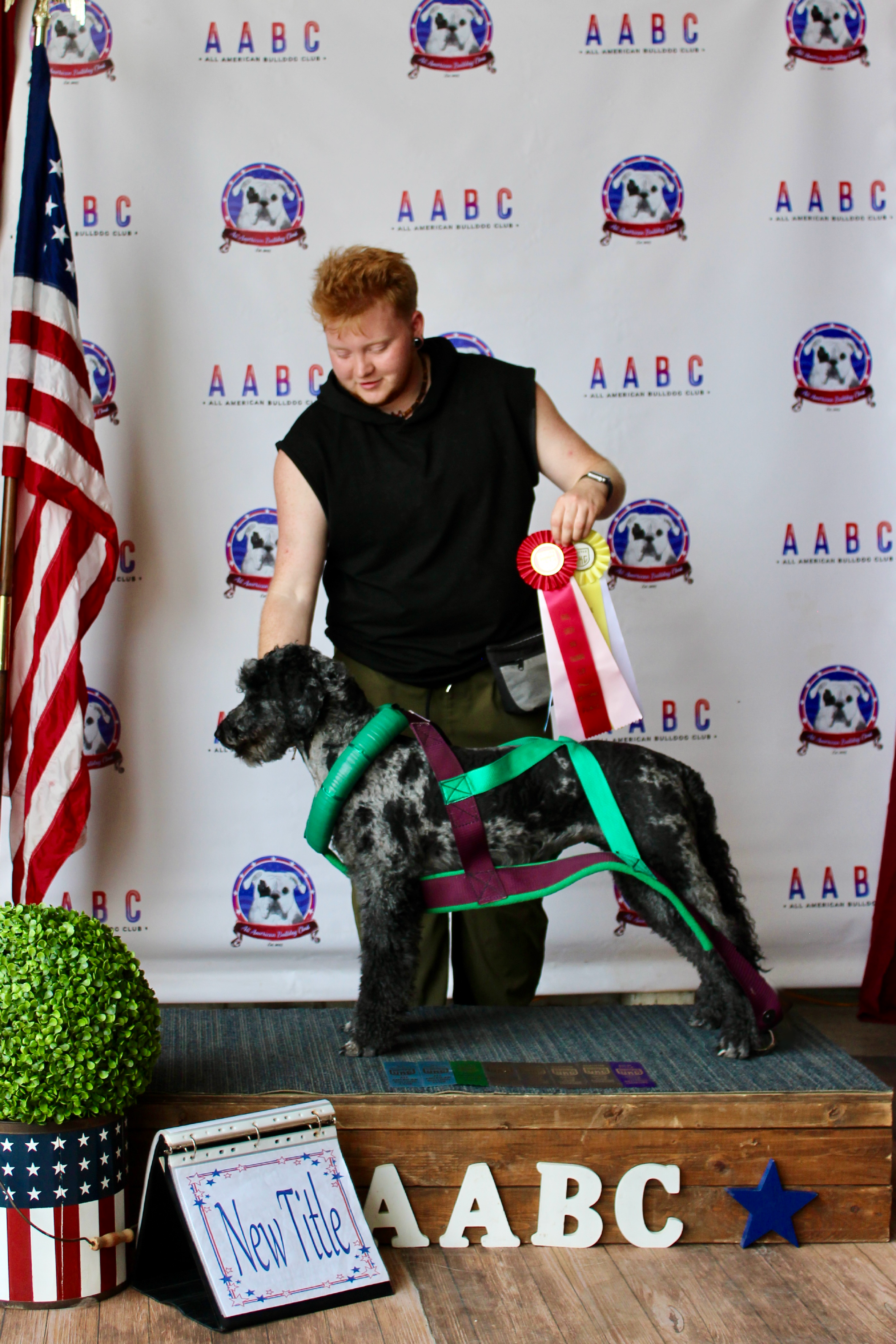
Health Testing Complete
CDR-26-6409c9e8
OFA PL024376
Full Registration
female
Sporty Companion Mix
Born 3/18/2023
Color & Coat
Black based; Phantom / Tan points, Merle; Curly, Long, Single Furnished by DNA
Size
Height: 23"
Weight: 45 lbs
Genetic COI
5%
Ownership
Health Results
Shoulders OFA Normal 3y 3m
Hips OFA Fair 3y 3m
Elbows OFA L: Normal · R: Normal 3y 3m
Patellas OFA L: Normal · R: Normal 3y 3m
Eyes OFA Normal 3y 0m
Cardiac OFA Auscultation Normal 3y 0m
DNA
Canine Multifocal Retinopathy 1 (cmr1) (BEST1): 1 copy
Expand to see all relevant clear results (254)
Laryngeal Paralysis - Miniature Bull Terrier (RAPGEF6): ClearStargardt Disease - Labrador (ABCA4): ClearCongenital Stationary Night Blindness - Briard (RPE65): ClearNeuronal Ceroid Lipofuscinosis 12 - Australian Cattle Dog (ATP13A2): ClearShaking Puppy Syndrome - ESS (PLP1): ClearThrombopathia - American Eskimo (RASGRP1): ClearOsteogenesis Imperfecta - Beagle (COL1A2): ClearProgressive Retinal Atrophy PRA3 (FAM161A): ClearCystinuria Type I-A - Newfoundland (SLC3A1): ClearVon Willebrand Disease Type III - Shetland Sheepdog (VWF): ClearInflammatory Myopathy (SLC25A12): ClearPrimary Open Angle Glaucoma - Norwegian Elkhound (ADAMTS10): ClearGlycogen Storage Disease IIIA - Curly Coated Retriever (AGL): ClearGolden Retriever PRA 2 (GR-PRA2) (TTC8): ClearCongenital Hypothyroidism - Tenterfield Terrier (TPO): ClearThrombopathia - Basset Hound (RASGRP1): ClearEhlers Danlos - Doberman (ADAMTS2): ClearDilated Cardiomyopathy 2 - Doberman (TTN): ClearNeuronal Ceroid Lipofuscinosis 1 - Dachshund (PPT1): ClearUllrich-like Congenital MD - Landseer (COL6A1): ClearAutosomal Recessive Hereditary Nephropathy - ESS (COL4A4): ClearSpinocerebellar Ataxia - Alpine Dachsbracke (SCN8A): ClearCanine Multifocal Retinopathy 3 (cmr3) (BEST1): ClearThrombopathia - Landseer (RASGRP1): ClearHereditary Vitamin D-Resistant Rickets (VDR): ClearMDR1 Drug Sensitivity (ABCB1): ClearPRA Bardet-Biedl Syndrome - Sheltie (BBS2): ClearGM1 Gangliosidosis - Alaskan Husky (GLB1): ClearGloboid Cell Leukodystrophy (Krabbe Disease) - Terrier (GALC): ClearEctodermal Dysplasia/Skin Fragility - Chesapeake (PKP1): ClearMacular Corneal Dystrophy (MCD) (CHST6): ClearLagotto Storage Disease (ATG4D): ClearPrimary Open Angle Glaucoma - Beagle (ADAMTS10): ClearIchthyosis - German Shepherd (ASPRV1): ClearNeuroaxonal Dystrophy - Spanish Water Dog (TECPR2): ClearPyruvate Kinase Deficiency - Beagle (PKLR): ClearFactor VII Deficiency (F7): ClearGM1 Gangliosidosis - Shiba Inu (GLB1): ClearCongenital Myasthenic Syndrome - Jack Russell (CHRNE): ClearHereditary Ataxia - OES/Gordon Setter (RAB24): ClearNemaline Myopathy - American Bulldog (NEB): ClearCongenital Macrothrombocytopenia (TUBB1): ClearLong QT Syndrome (KCNQ1): ClearNeuroaxonal Dystrophy - Rottweiler (VPS11): ClearFactor VIII Deficiency, Hemophilia A - German Shepherd 1 (F8 (Exon 11)): ClearCongenital Dyshormonogenic Hypothyroidism - Shih Tzu (SLC5A5): ClearDisproportionate Dwarfism - Dogo Argentino (PRKG2): ClearHereditary Footpad Hyperkeratosis - Terrier/Kromfohrlander (FAM83G): ClearRaine Syndrome (FAM20C): ClearFactor IX Deficiency, Hemophilia B - Terrier (F9): ClearP2Y12 Receptor Platelet Disorder (P2Y12): ClearOsteogenesis Imperfecta - Golden Retriever (COL1A1): ClearCongenital Cornification Disorder - Chihuahua (NSDHL): ClearMuscular Dystrophy - CKCS (DMD): ClearMuscular Dystrophy - Golden Retriever (DMD): ClearMucopolysaccharidosis VII - Terrier Brasileiro (GUSB): ClearNeuronal Ceroid Lipofuscinosis 8 - English Setter (CLN8): ClearCardiomyopathy and Juvenile Mortality (YARS2): ClearPrimary Hyperoxaluria (AGXT): ClearGlycogen Storage Disease IA (Von Gierke) - Maltese (G6PC): ClearGoniodysgenesis and Glaucoma (PLD) (OLFML3): ClearAutosomal Recessive Hereditary Nephropathy - Cocker (COL4A4): ClearHypomyelination and Tremors - Weimaraner (FNIP2): ClearIchthyosis - American Bulldog (NIPAL4): ClearRecurrent Inflammatory Pulmonary Disease - Rough Collie (AKNA): ClearEarly Onset Adult Deafness - Rhodesian Ridgeback (EPS8L2): ClearPrimary Ciliary Dyskinesia - Alaskan Malamute (NME5): ClearNeonatal Interstitial Lung Disease (LAMP3): ClearPrekallikrein Deficiency (KLKB1): ClearNeuronal Ceroid Lipofuscinosis 7 - Chihuahua/Chinese Crested (MFSD8): ClearProtein Losing Nephropathy (PLN) (NPHS1): ClearOculocutaneous Albinism - Small Breed (SLC45A2): ClearGlycogen Storage Disease II (Pompe) - Lapphund (GAA): ClearFactor VIII Deficiency, Hemophilia A - German Shepherd 2 (F8 (Exon 1)): ClearMicrophthalmia - SCWT (RBP4): ClearImerslund-Grasbeck Syndrome - Border Collie (CUBN): ClearPyruvate Kinase Deficiency - Labrador Retriever (PKLR): ClearPolycystic Kidney Disease (PKD) (PKD1): ClearSpongy Degeneration with Cerebellar Ataxia 2 (SDCA2) (ATP1B2): ClearFanconi Syndrome - Basenji (FAN1): ClearChondrodysplasia - Norwegian Elkhound/Karelian Bear Dog (ITGA10): ClearCongenital Stationary Night Blindness - Beagle (LRIT3): ClearCanine Leukocyte Adhesion Deficiency Type III (CLAD III) (FERMT3): ClearProgressive Retinal Atrophy rcd1 - Irish Setter (PDE6B): ClearCystinuria Type II-B - Min Pin (SLC7A9): ClearSpinocerebellar Ataxia Late-Onset (LoSCA) (CAPN1): ClearDystrophic Epidermolysis Bullosa - Golden Retriever (COL7A1): ClearHereditary Footpad Hyperkeratosis - Rottweiler (DSG1): ClearX-Linked PRA 1 (XL-PRA1) (RPGR): ClearFetal-Onset Neonatal Neuroaxonal Dystrophy - Giant Schnauzer (MFN2): ClearDilated Cardiomyopathy - Schnauzer (RBM20): ClearLigneous Membranitis (PLG): ClearImerslund-Grasbeck Syndrome - Beagle (CUBN): ClearSevere Combined Immunodeficiency (SCID) - Terrier (PRKDC): ClearMyasthenia Gravis-Like Syndrome - Heideterrier (CHRNE): ClearShar-Pei Autoinflammatory Disease (SPAID) (MTBP): ClearCollie Eye Anomaly (CEA) (NHEJ1): ClearBald Thigh Syndrome (IGFBP5): ClearPRA - Lapponian Herder (IFT122): ClearJuvenile Myoclonic Epilepsy (DIRAS1): ClearDry Eye Curly Coat Syndrome (CKCSID) (FAM83H): ClearDeafness/Vestibular Syndrome - Doberman (DVDob) (MYO7A): ClearMucopolysaccharidosis IIIB - Schipperke (NAGLU): ClearGM1 Gangliosidosis - Portuguese Water Dog (GLB1): ClearJunctional Epidermolysis Bullosa - Australian Cattle Dog (LAMA3): ClearPyruvate Kinase Deficiency - Basenji (PKLR): ClearSpongy Degeneration with Cerebellar Ataxia 1 (SDCA1) (KCNJ10): ClearOculoskeletal Dysplasia 2 - Samoyed (COL9A2): ClearAchromatopsia - Labrador Retriever (CNGA3): ClearDegenerative Myelopathy (DM) (SOD1A): ClearCentronuclear Myopathy (CNM) (PTPLA): ClearAmelogenesis Imperfecta - Parson Russell Terrier (ENAM): ClearCanine Multifocal Retinopathy 2 (cmr2) (BEST1): ClearDay Blindness/Achromatopsia - GSP (CNGB3): ClearInherited Myopathy of Great Danes (BIN1): ClearProgressive Retinal Atrophy CNGA (CNGA1): ClearOculocutaneous Albinism - Bullmastiff (SLC45A2): ClearNeuronal Ceroid Lipofuscinosis 6 - Australian Shepherd (CLN6): ClearRenal Cystadenocarcinoma and Nodular Dermatofibrosis (FLCN): ClearGolden Retriever PRA 1 (GR-PRA1) (SLC4A3): ClearPyruvate Dehydrogenase Deficiency - Spaniel (PDP1): ClearNeuronal Ceroid Lipofuscinosis 4A - Am Staff (ARSG): ClearLeukodystrophy - Standard Schnauzer (TSEN54): ClearMusladin-Lueke Syndrome (MLS) (ADAMTSL2): ClearMyotubular Myopathy - Labrador (MTM1): ClearX-linked Ectodermal Dysplasia (XHED) (EDA): ClearExercise-Induced Collapse (EIC) (DNM1): ClearProgressive Retinal Atrophy rcd3 (PDE6A): ClearNeuronal Ceroid Lipofuscinosis 10 - American Bulldog (CTSD): ClearNeuronal Ceroid Lipofuscinosis 5 - Border Collie (CLN5): ClearPrimary Open Angle Glaucoma - Basset Fauve (ADAMTS17): ClearPersistent Mullerian Duct Syndrome (PMDS) (AMHR2): ClearL-2-Hydroxyglutaricaciduria (L2HGA) - Staffie (L2HGDH): ClearIchthyosis - Great Dane (SLC27A4): ClearFocal Palmoplantar Keratoderma - Dogue de Bordeaux (KRT16): ClearNarcolepsy - Dachshund (HCRTR2): ClearCongenital Myasthenic Syndrome - Labrador (COLQ): ClearAchromatopsia - German Shepherd (CNGA3): ClearGM2 Gangliosidosis - Japanese Chin (HEXA): ClearRetina Dysplasia/Optic Nerve Hypoplasia - Golden (SIX6): ClearPFK Deficiency - Wachtelhund (PFKM): ClearCleft Lip/Palate - NSDTR (ADAMTS20): ClearComplement 3 Deficiency (C3) (C3): ClearVon Willebrand Disease Type III - Kooikerhondje (VWF): ClearMyotonia Congenita - Australian Cattle Dog (CLCN1): ClearPyruvate Kinase Deficiency - Terrier (PKLR): ClearIchthyosis ICH1 - Golden Retriever (PNPLA1): ClearDiffuse Cystic Renal Dysplasia - Norwich (INPP5E): ClearTrapped Neutrophil Syndrome (TNS) (VPS13B): ClearMucopolysaccharidosis VI - Miniature Pinscher (ARSB): ClearPrimary Lens Luxation (ADAMTS17): ClearGlanzmann Thrombasthenia Type I - Great Pyrenees (ITGA2B): ClearMalignant Hyperthermia (RYR1): ClearAlaskan Husky Encephalopathy (SLC19A3): ClearAlanine Aminotransferase Activity (GPT): ClearJuvenile Laryngeal Paralysis/Polyneuropathy - Rottweiler (RAB3GAP1): ClearMyotonia Congenita - Miniature Schnauzer (CLCN1): ClearProgressive Retinal Atrophy crd1 - Am Staff (PDE6B): ClearCanine Multiple System Degeneration - Chinese Crested (SERAC1): ClearCleft Palate CP1 - NSDTR (DLX6): ClearEpisodic Falling Syndrome (BCAN): ClearOsteogenesis Imperfecta - Dachshund (SERPINH1): ClearCanine Fucosidosis (FUCA1): ClearCMO - Basset Hound (SLC37A2): ClearGM2 Gangliosidosis - Poodle (HEXB): ClearSpinocerebellar Ataxia with Myokymia and/or Seizures (KCNJ10): ClearFactor IX Deficiency, Hemophilia B - Rhodesian Ridgeback (F9): ClearCobalamin Malabsorption with Proteinuria - Komondor (CUBN): ClearHereditary Nasal Parakeratosis (HNPK) (SUV39H2): ClearMethemoglobinemia - CYB5R3 (CYB5R3): ClearNarcolepsy - Labrador Retriever (HCRTR2): ClearNarcolepsy - Doberman (HCRTR2): ClearCongenital Hypothyroidism - Rat/Toy/Hairless Terrier (TPO): ClearPOAG and Primary Lens Luxation - Shar-Pei (ADAMTS17): ClearLethal Acrodermatitis (LAD) (MKLN1): ClearIntestinal Lipid Malabsorption - Australian Kelpie (ACSL5): ClearCerebellar Hypoplasia - Eurasier (VLDLR): ClearEarly Bilateral Deafness - Rottweiler (LOXHD1): ClearDilated Cardiomyopathy 1 - Doberman (PDK4): ClearAlaskan Malamute Polyneuropathy (AMPN) (NDRG1): ClearAutosomal Dominant PRA (RHO): ClearProgressive Retinal Atrophy crd4/cord1 (RPGRIP1): ClearCanine Multiple System Degeneration - Kerry Blue (SERAC1): ClearAcral Mutilation Syndrome - Spaniel/Pointer (GDNF-AS): ClearSkeletal Dysplasia 2 - Labrador (COL11A2): ClearCanine Elliptocytosis (SPTB): ClearCongenital Myasthenic Syndrome - Golden Retriever (COLQ): ClearNeuronal Ceroid Lipofuscinosis 8 - Saluki (CLN8): ClearChondrodystrophy/IVDD (CDDY) (FGF4-chr12): ClearLundehund Syndrome (LEPREL1): ClearHypocatalasia (CAT): ClearDay Blindness/Achromatopsia - Alaskan Malamute (CNGB3): ClearVon Willebrand Disease Type III - Terrier (VWF): ClearSensory Neuropathy - Border Collie (FAM134B): ClearPituitary Dwarfism - Karelian Bear Dog (POU1F1): ClearNeuronal Ceroid Lipofuscinosis 8 - Australian Shepherd (CLN8): ClearMethemoglobinemia - Pit Bull Terrier (CYB5R3 (Exon 7)): ClearHereditary Xanthinuria (XDH): ClearParoxysmal Dyskinesia (PxD) (PIGN): ClearNeonatal Encephalopathy with Seizures (NEWS) (ATF2): ClearUnilateral Deafness/Vestibular Syndrome - Doberman (PTPRQ): ClearMyostatin Deficiency (Bully Whippet) (MSTN): ClearHyperuricosuria (HUU) (SLC2A9): ClearFamilial Enamel Hypoplasia - Italian Greyhound (ENAM): ClearDental-Skeletal-Retinal Anomaly - Cane Corso (MIA3): ClearSevere Combined Immunodeficiency (SCID) - Wetterhoun (RAG1): ClearPyruvate Kinase Deficiency - Pug (PKLR): Clear2,8-DHA Urolithiasis (APRT): ClearLimb-Girdle MD 2D - Mini Dachshund (SGCA): ClearVon Willebrand Disease Type II - Pointer (VWF): ClearCongenital Hypothyroidism with Goiter - French Bulldog (TPO): ClearBernard-Soulier Syndrome (GP9): ClearFactor VIII Deficiency, Hemophilia A - Boxer (F8): ClearCerebellar Ataxia - Finnish Hound (SEL1L): ClearFactor XI Deficiency - Kerry Blue Terrier (F11): ClearAlexander Disease (GFAP): ClearLeonberger Polyneuropathy 1 (LPN1) (ARHGEF10): ClearHypophosphatasia - Karelian Bear Dog (ALPL): ClearX-Linked Hereditary Nephropathy - Samoyed (COL4A5): ClearCystinuria Type II-A - ACD (SLC3A1): ClearBenign Familial Juvenile Epilepsy (LGI2): ClearCongenital Myasthenic Syndrome - Old Danish Pointing Dog (CHAT): ClearJunctional Epidermolysis Bullosa - Australian Shepherd (LAMB3): ClearMucopolysaccharidosis IIIA - New Zealand Huntaway (SGSH (Exon 6)): ClearX-linked SCID - Basset Hound (IL2RG): ClearX-linked SCID - Corgi (IL2RG): ClearProportionate Dwarfism - Chihuahua (GH1): ClearMucopolysaccharidosis VII - German Shepherd (GUSB): ClearCanine Leukocyte Adhesion Deficiency Type I (CLAD I) (ITGB2): ClearGlanzmann Thrombasthenia Type I - Otterhound (ITGA2B): ClearDystrophic Epidermolysis Bullosa - Central Asian Shepherd (COL7A1): ClearProgressive Retinal Atrophy PRA1 (CNGB1): ClearMucopolysaccharidosis IIIA - Dachshund (SGSH): ClearNeuronal Ceroid Lipofuscinosis 2 - Dachshund (TPP1): ClearDemyelinating Polyneuropathy (SBF2): ClearNeuronal Ceroid Lipofuscinosis 5 - Golden Retriever (CLN5): ClearScott Syndrome (TMEM16F): ClearCerebellar Abiotrophy (NCCD) - Beagle (SPTBN2): ClearSuccinic Semialdehyde Dehydrogenase Deficiency - Saluki (ALDH5A1): ClearPFK Deficiency - Whippet/ESS (PFKM): ClearBeta-Mannosidosis (MANBA): ClearProgressive Retinal Atrophy prcd (PRCD): ClearProgressive Retinal Atrophy - SAG (SAG): ClearIchthyosis Epidermolytic Hyperkeratosis - Terrier (KRT10): ClearPrimary Ciliary Dyskinesia - OES (CCDC39): ClearMay-Hegglin Anomaly (MYH9): ClearCraniomandibular Osteopathy (CMO) (SLC37A2): ClearOsteochondrodysplasia - Poodle (SLC13A1): ClearHereditary Cataracts - Australian Shepherd (HSF4): ClearHereditary Nasal Parakeratosis - Greyhound (SUV39H2): ClearLeonberger Polyneuropathy 2 (LPN2) (GJA9): ClearVon Willebrand Disease Type I (VWF): ClearLimb Girdle Muscular Dystrophy - Boston Terrier (SGCD): ClearUllrich-like Congenital MD - Labrador (COL6A3): Clear
Temperament Assessment
(click to view)
Click on the bar for details.
LowerHigher
Drives & Motivation
Blue indicates low drive, motivation, or enjoyment in this area. Orange indicates high drive, motivation, or enjoyment.
Physical Closeness / Space Sharing with Known People
Social Behavior with New People
Dog Sociability
Handler Focus and Biddability
Escape and Roaming
Working Drives
Prey Drive
Territorial / Defensive Drive
Arousal
Tolerances
Blue indicates low tolerance for this activity or situation. Orange indicates high tolerance.
Barrier and Confinement Tolerance
Tolerance of Pain
Handling Tolerance
Heat and Cold Tolerance
Equipment Tolerance
Tolerance of Novelty
Tolerance of the Car
Tolerance of Children
Tolerance of Separation
Tolerance of Sound
Tolerance for Low Activity or Stimulation
Resilience
Habits / Behaviors
Blue indicates low frequency or occurrence of this behavior. Orange indicates higher frequency of the behavior.
House training / soiling indoors
Coprophagia
Car Sickness
Resource Guarding
Greeting Excitability
Vocalization
Chewing / Pica
Leash Pulling
Pedigree
| Parents | Grandparents | Great-Grandparents | Great-Great-Grandparents |
Not available | Not available | Not available | |
Not available | |||
Not available | Not available | ||
Not available | |||
Not available | Not available | Not available | |
Not available | |||
Not available | Not available | ||
Not available | |||
Not available | Not available | Not available | |
Not available | |||
Not available | Not available | ||
Not available | |||
Not available | Not available | Not available | |
Not available | |||
Not available | Not available | ||
Not available |
Siblings
No siblings available.
Offspring
- Chai’s Good Omen 4/28/2024
Is this your dog? Request owner portal access